"Just give me a ballpark."
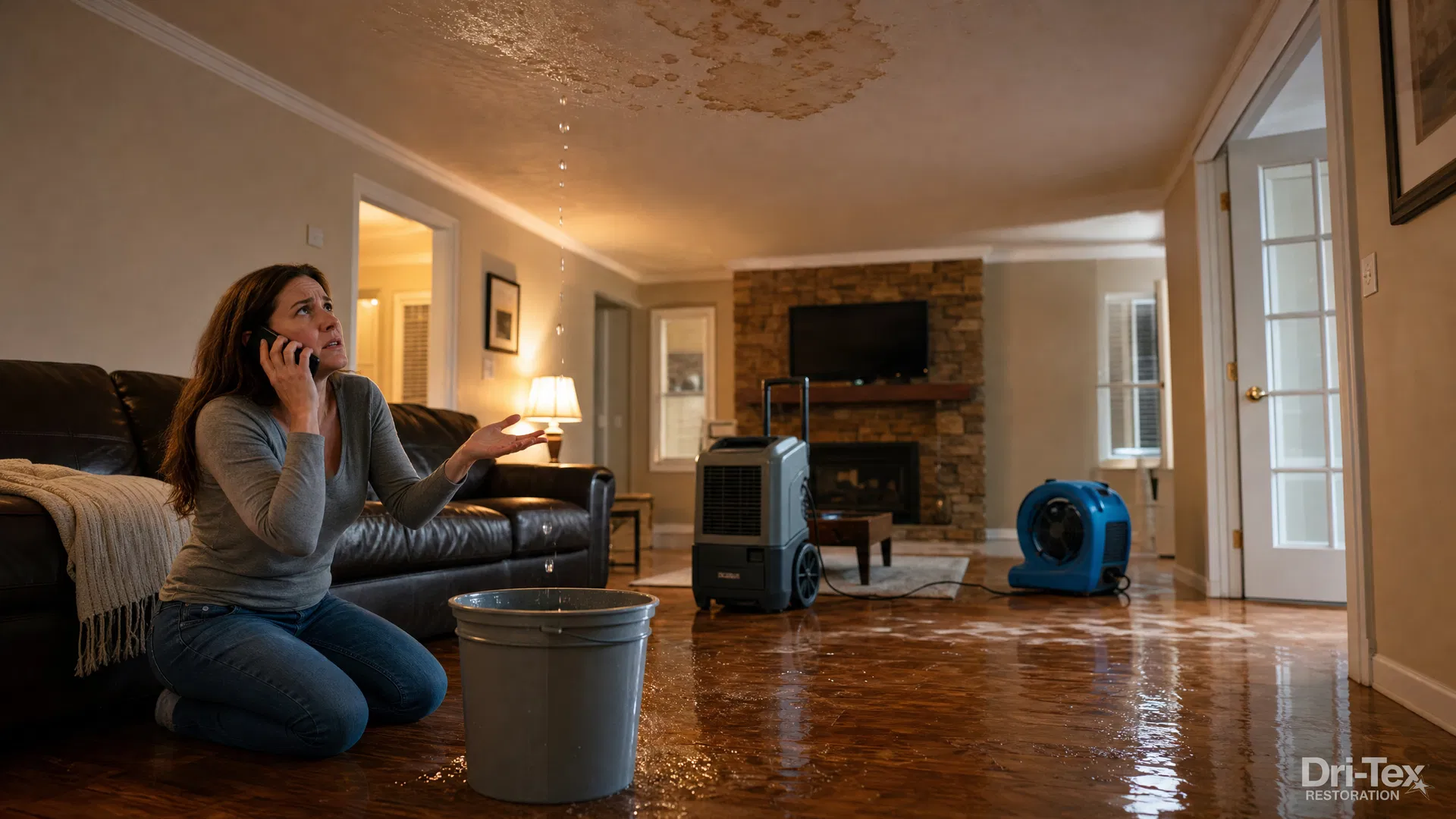
That is one of the most common phrases we hear when someone calls Dri-Tex Restoration after discovering water damage. They are stressed, they need to make decisions quickly, and they want to know what they are walking into financially.
The honest answer is that water damage restoration cost varies enormously — from a few hundred dollars for a small contained leak to well over $50,000 for a major loss. But the better answer, the one this article exists to give, is that the variation is not random. There are specific, predictable factors that drive cost up or down, and once you understand them, you can make informed decisions instead of feeling at the mercy of whatever number a contractor writes down.
After 20+ years of working water damage jobs across Conroe, The Woodlands, Spring, Willis, Magnolia, and the Greater Houston area, here is exactly what water damage restoration actually costs in 2026, why those numbers vary, and how to avoid the most expensive mistakes.
The Headline Numbers: What Water Damage Restoration Actually Costs
Industry-wide, water damage restoration in 2026 typically falls into the following ranges. These reflect what we see across thousands of jobs in the Greater Houston market and align with national industry averages reported by IICRC-certified firms.
| Project Type | Typical Cost Range | What This Usually Includes | |
|---|---|---|---|
| Small contained leak (1 room, clean water) | $1,200 – $3,500 | Extraction, drying, antimicrobial treatment, monitoring | |
| Medium loss (2–3 rooms, clean water) | $3,500 – $8,500 | Above plus partial demolition of wet drywall and baseboards | |
| Large loss (4+ rooms or multiple floors) | $8,500 – $25,000+ | Mitigation plus significant demolition, equipment for several days | |
| Category 2 water (gray water, dishwasher) | Add 20–40% to above | Higher-grade antimicrobials, more material removal | |
| Category 3 water (sewage, flood) | Add 50–100%+ | Full PPE, contamination protocols, mandatory removal of porous materials | |
| Mold remediation (when required) | $2,500 – $15,000+ | Containment, HEPA filtration, removal, post-test clearance | |
| Reconstruction (after mitigation) | $5,000 – $40,000+ | Drywall, flooring, paint, cabinetry, trim — varies widely by finish level |
These ranges are intentionally wide because real water damage is highly variable. The next sections explain exactly what moves a project from one end of the range to the other.
Why Most Cost Confusion Comes From Mixing Up Mitigation and Reconstruction
This is one of the biggest sources of price confusion, and it is worth getting straight before we go further.
Mitigation is the emergency phase. Stop the water source, extract standing water, dry the structure, prevent secondary damage, and remove materials that cannot be saved. This is what most people mean when they say "water damage mitigation."
Reconstruction is rebuilding the home back to pre-loss condition. New drywall, paint, flooring, trim, cabinetry. This is its own separate phase, usually billed separately, and it is often where total project costs surprise homeowners.
When someone says "my water damage cost $30,000," they often mean total project cost — mitigation plus reconstruction combined. When a restoration company gives an initial estimate of $4,500, that may be mitigation only. Both are accurate, but they answer different questions.
Pro tip: Always ask whether a quote is mitigation-only, reconstruction-only, or full project. Reputable companies break this out clearly. Vague quotes are a warning sign.
The 7 Factors That Drive What Water Damage Restoration Actually Costs
Every cost decision on a water damage project comes back to these seven variables. The more honest a contractor is about how each one applies to your loss, the more accurate the estimate.
1. Water Category (Clean, Gray, or Black)
The IICRC classifies water into three categories based on contamination level. Each step up dramatically increases what gets removed and how much cleanup is required.
• Category 1 (clean water) — Supply line break, water heater rupture, refrigerator line. Lowest cost.
• Category 2 (gray water) — Dishwasher overflow, washing machine, aquarium. Mid-range cost.
• Category 3 (black water) — Sewage backup, toilet overflow with solid waste, floodwater from outside. Highest cost — many porous materials must be removed regardless of how dry they get.
2. Water Class (How Much Material Is Saturated)
The IICRC also classifies the extent of saturation as Class 1 through Class 4. Class 4 (deep saturation into materials like hardwood, plaster, or concrete) takes specialty drying equipment and significantly more time, increasing daily equipment cost.
3. Affected Square Footage
The size of the affected area is the largest single variable. A 200-square-foot bathroom is a very different project from a 2,000-square-foot first floor. Cost scales roughly linearly with affected area, but with diminishing returns — very large losses get more efficient on a per-square-foot basis.
4. Number of Days of Equipment Required
Air movers and dehumidifiers are typically billed per piece per day. A small loss might need 3 air movers for 3 days. A large loss might need 25 air movers and 4 commercial dehumidifiers running for 7 days. Equipment alone can range from $300 a day to over $2,000 a day on big losses.
5. Materials Affected
Carpet and pad are inexpensive to remove. Engineered hardwood is moderate. Solid hardwood, custom tile, natural stone, or built-in cabinetry can dramatically increase both demolition and reconstruction cost. The same square footage in different rooms can vary by 5x in total project cost based on finishes alone.
6. Hidden Damage and Discovery Costs
What looks like a small leak often turns out to be larger once walls are opened. Industry standard practice is to start with what is visible and adjust the scope (with documentation and adjuster approval) as more damage is discovered. A good restoration company will explain this upfront rather than absorb it as a surprise change order later.
7. Speed of Response
This is the factor most under your control — and most often the difference between a $4,000 project and a $25,000 one. Water damage starts a 24-to-48-hour clock on mold growth and material saturation. Every hour of delay can compound the cost. A homeowner who calls within 2 hours of discovery typically pays a fraction of what someone who waits 2 days pays for the same initial leak.
Three Real Water Damage Restoration Projects (And What They Actually Cost)
Anonymized examples from actual jobs in the Conroe and Greater Houston area. Numbers are real.
Case 1: The $2,400 Project — Caught Within 90 Minutes
A homeowner in Spring noticed water pooling under her dishwasher within minutes of running it. She shut off the water valve and called us. We arrived within 90 minutes.
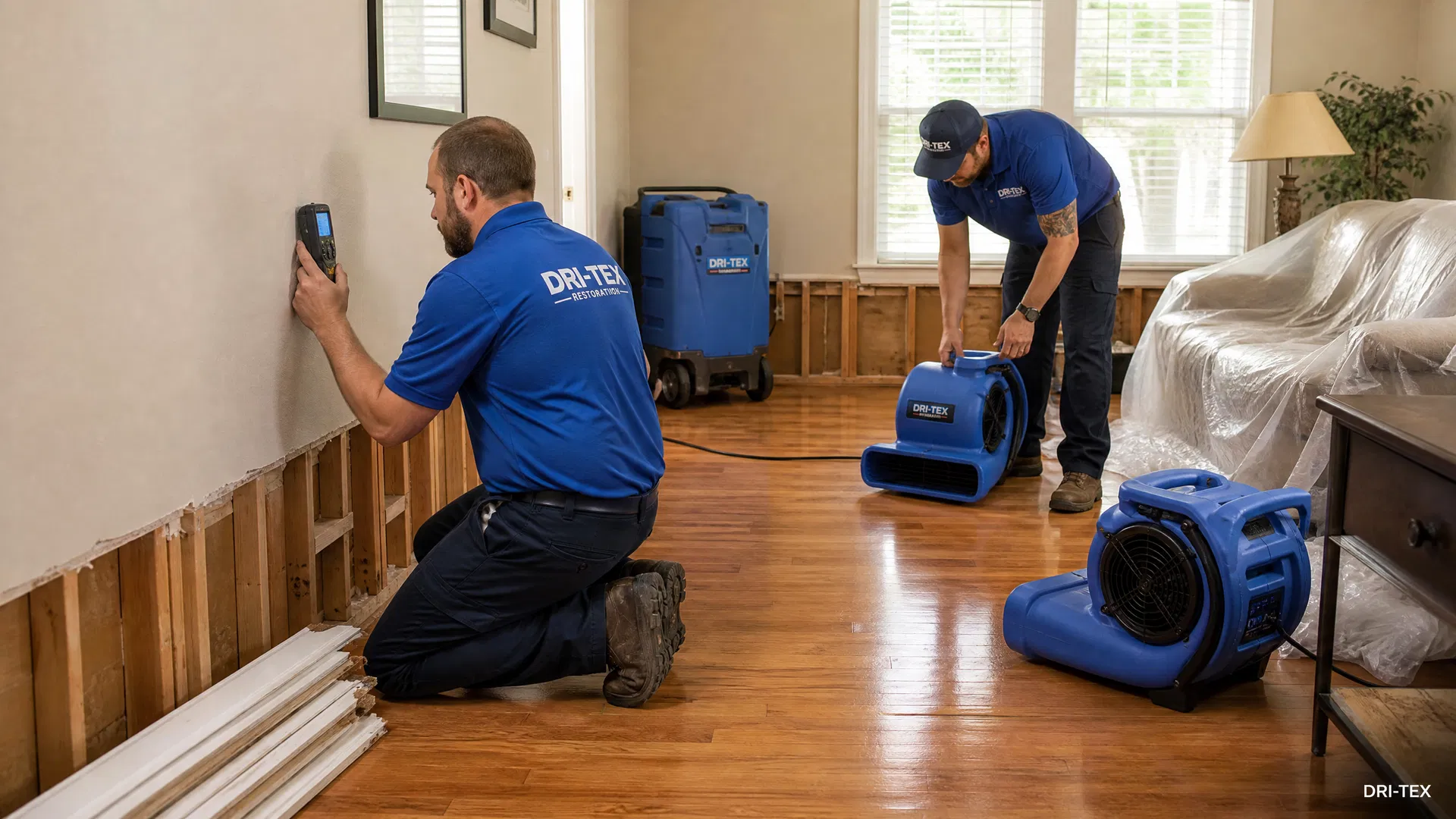
Scope: Extract standing water, remove a 6-foot section of soaked baseboard, set up 3 air movers and a dehumidifier for 3 days, monitor moisture, antimicrobial treatment.
Total mitigation cost: $2,400. Reconstruction was minimal — $750 for new baseboard and paint. Insurance paid the full claim minus deductible.
What made it cheap: Speed. Clean water. Single room. Caught before drywall absorbed enough to require demolition.
Case 2: The $14,800 Project — Three Days of Delay
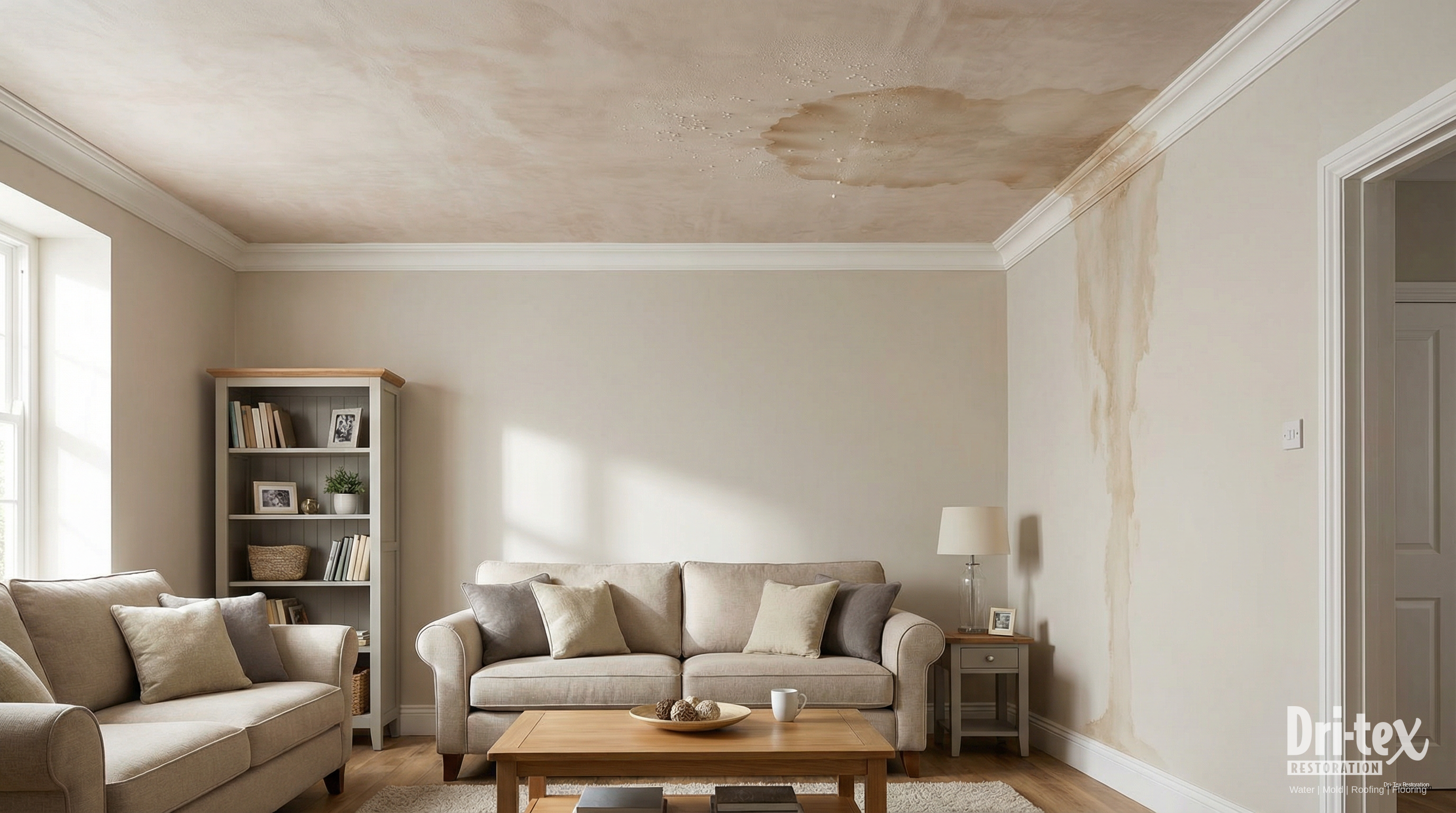
A homeowner in Conroe had a slow leak from a second-floor bathroom that he noticed but assumed was minor. He waited three days to call. By the time we opened the ceiling below, the joists were saturated and mold had begun forming inside the cavity.
Scope: Mitigation across two floors. Removal of approximately 240 square feet of drywall and ceiling. Mold remediation in the cavity. 7 days of drying with 12 air movers and 2 dehumidifiers. Reconstruction of the affected ceiling and walls.
Total project cost: $14,800 (mitigation $7,200, mold remediation $2,800, reconstruction $4,800).
What made it expensive: Three-day delay turned a one-room mitigation into a two-floor project with mold.
Case 3: The $48,000 Project — Sewer Backup During a Holiday
A family in Magnolia experienced a sewer backup on Thanksgiving Day. They attempted to clean it themselves overnight before calling for help the next morning.
Scope: Category 3 contamination across 1,400 square feet of first floor. Mandatory removal of all carpet, pad, drywall up to 2 feet on every affected wall, lower kitchen cabinets, and contaminated personal items. Specialty cleaning, full PPE protocols, mold remediation, and complete first-floor reconstruction including new flooring, drywall, paint, and lower cabinetry.
Total project cost: Approximately $48,000. The family had a sewer backup endorsement on their policy, which paid most of the loss. Without that endorsement, this would have been entirely out-of-pocket.
What made it expensive: Category 3 water and large affected area. Even with the fastest possible response, this project would have run $35,000+. By the time we arrived, the initial cleanup attempt had spread contamination further — adding to the scope and requiring additional decontamination of tools and materials.
How Insurance Affects What You Actually Pay Out of Pocket
For most homeowners, the headline cost number and the out-of-pocket cost are very different. If the loss is covered by insurance, your out-of-pocket is usually just the deductible — typically $1,000 to $5,000 depending on your policy. The insurance carrier pays the rest directly to the restoration contractor.
Whether the loss is covered depends on the cause. Sudden and accidental water damage (a burst pipe, a failed appliance, a storm-caused roof breach) is generally covered. Gradual damage, neglect, and flooding from outside the home generally are not.
Important: Choose your restoration contractor carefully. The lowest bid is rarely the best value. Carriers expect documentation built in industry-standard software (Xactimate), and a properly credentialed restoration company protects your claim by providing it. Cutting corners here often costs more downstream when the carrier pushes back on a poorly documented scope.
Pricing Red Flags to Watch For
After 20+ years of restoration work, here are the patterns that almost always lead to project disputes or surprise costs.
• A flat-rate quote sight unseen. No reputable restoration company can give a real number without seeing the loss and taking moisture readings.
• A quote dramatically lower than competitors. In restoration, low usually means an incomplete scope. The shortcut shows up three months later when mold appears.
• Pressure to sign on the spot. Water damage is urgent, but you should still have time to read what you are signing. Anyone refusing to give you that time is a problem.
• No written scope or estimate. Any project should start with a documented scope. Verbal-only agreements lead to disputes.
• No IICRC certification or TDLR licensing. In Texas, mold remediation requires a TDLR license. Industry-standard mitigation requires IICRC certification. Companies without either may not be qualified to do the work and may not be recognized by your insurance carrier.
• Refusal to bill the insurance carrier directly. Reputable restoration companies are comfortable working directly with adjusters. Companies that demand cash up front and tell you to fight with your insurer alone are often a red flag.
How to Keep Water Damage Restoration Cost as Low as Possible
Here is what we tell every homeowner who asks how to minimize what water damage restoration actually costs in their situation:
• Call within the first hour after a leak. Speed is the single biggest cost reducer.
• Shut off the water source immediately. Every minute of continued flow is more damage.
• Document with photos before doing any cleanup. This protects your insurance claim.
• Do not delay reporting to your insurer. Most policies require prompt notification.
• Choose an IICRC-certified, TDLR-licensed contractor. Proper credentials mean proper documentation, which means less friction with your carrier.
• Get the scope in writing before work starts. Understand exactly what is included and what is not.
• Ask whether the quote is mitigation-only, reconstruction-only, or full project.
• Take care of your home between events. Quarterly checks under sinks and behind appliances prevent the slow leaks that lead to denied claims and out-of-pocket repairs.
The Bigger Picture: What Water Damage Restoration Actually Cost Reflects
The number on a water damage estimate is not arbitrary. It reflects the time, equipment, materials, expertise, and documentation required to restore a home properly and protect the homeowner from secondary damage like mold or structural compromise.
The cheapest option is rarely the best option in this industry. The right question is not "how do I find the lowest price?" The right question is "how do I find the right scope at a fair price, with documentation that protects my insurance claim and a guarantee that the job is actually done right?"
That is what good restoration work looks like. The price reflects it.
Get a Real Quote on Water Damage Restoration in Conroe TX
If you are dealing with water damage right now, or trying to understand what a recent quote you received actually means, the team at Dri-Tex Restoration can help. We provide transparent estimates, document every job in industry-standard software, work directly with your insurance carrier, and stand behind our work with full IICRC and TDLR credentials. We will tell you what your specific situation costs — and why — in plain language.
Call us anytime at (936) 324-0006 for 24/7 emergency response, or schedule an inspection. We serve homeowners and property managers across Conroe, The Woodlands, Spring, Willis, Magnolia, Montgomery, and the Greater Houston area.
Licensed, insured, and IICRC-certified. IICRC #70007514 | TDLR #RC01533
Disclaimer: Cost ranges in this article reflect typical projects in the Greater Houston market in 2026 and are provided for general guidance only. Actual project pricing depends on specific damage, materials, and scope. All quoted figures are estimates, not commitments.