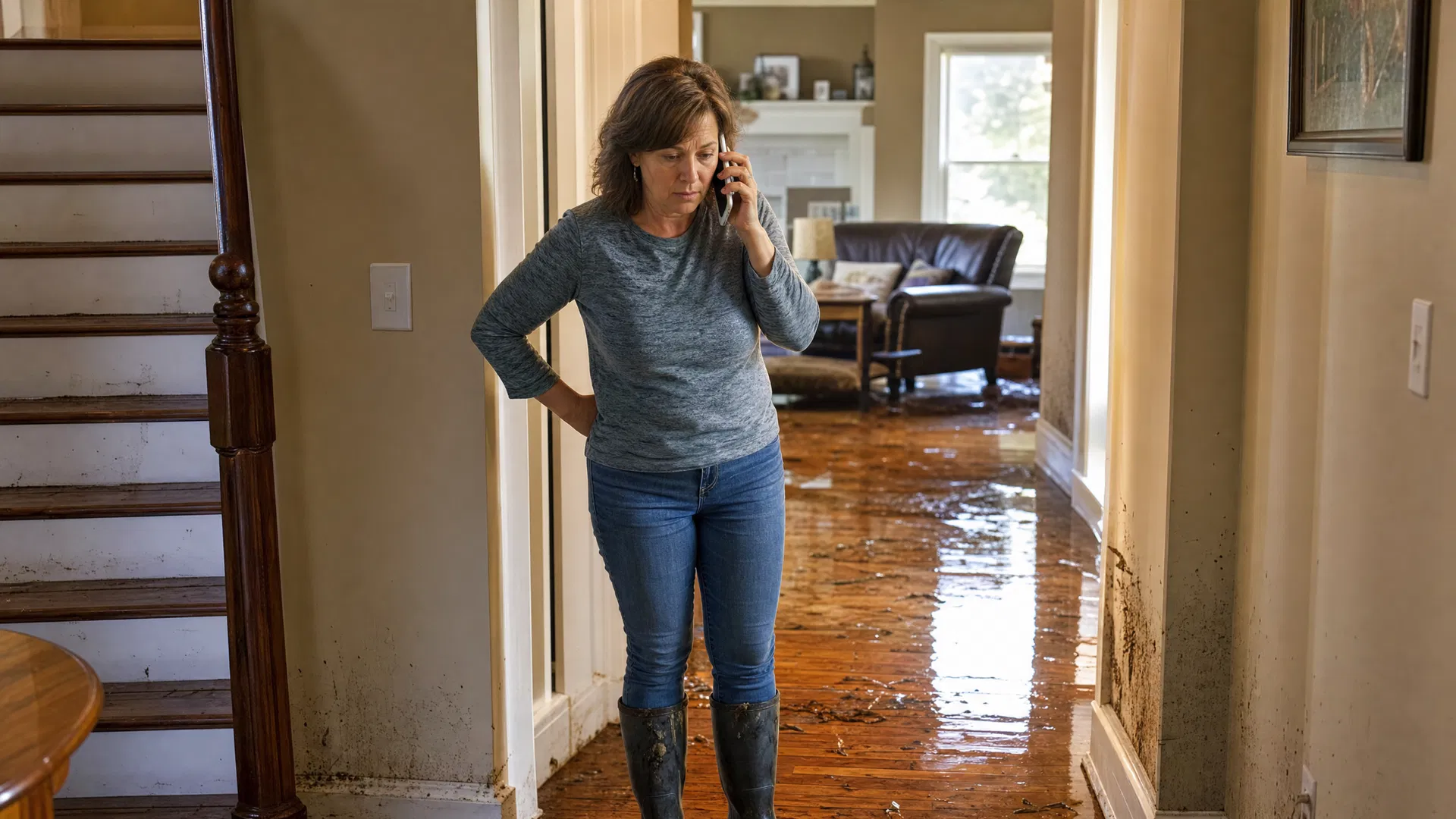
It usually starts the same way. A homeowner walks into the kitchen at 6 a.m. and steps into something wet. Or they pull back a rug and find swollen baseboards. Or a neighbor calls to say water is dripping from a shared wall. The first thought is almost always the same: Who do I call?
For most people, the instinct is to call a general contractor — someone who has done a remodel, built a deck, or fixed a roof in the past. That feels logical. Water broke something, so call the person who builds things.
In most water damage situations, that is the wrong first call.
After more than 20 years of combined experience responding to water losses across Montgomery County, our team at Dri-Tex Restoration has seen what happens when the order gets reversed. Calling a contractor before a water remediation company can cost homeowners thousands of dollars, complicate their insurance claim, and create mold problems that show up months later.
This post explains the difference between the two, when each one belongs in the process, and why the order you call them in matters more than most homeowners realize.
What a Water Remediation Company Actually Does
A water remediation company — sometimes called a mitigation company — is the first responder in a water damage event. Our job is not to rebuild your home. Our job is to stop the damage from spreading.
That work includes:
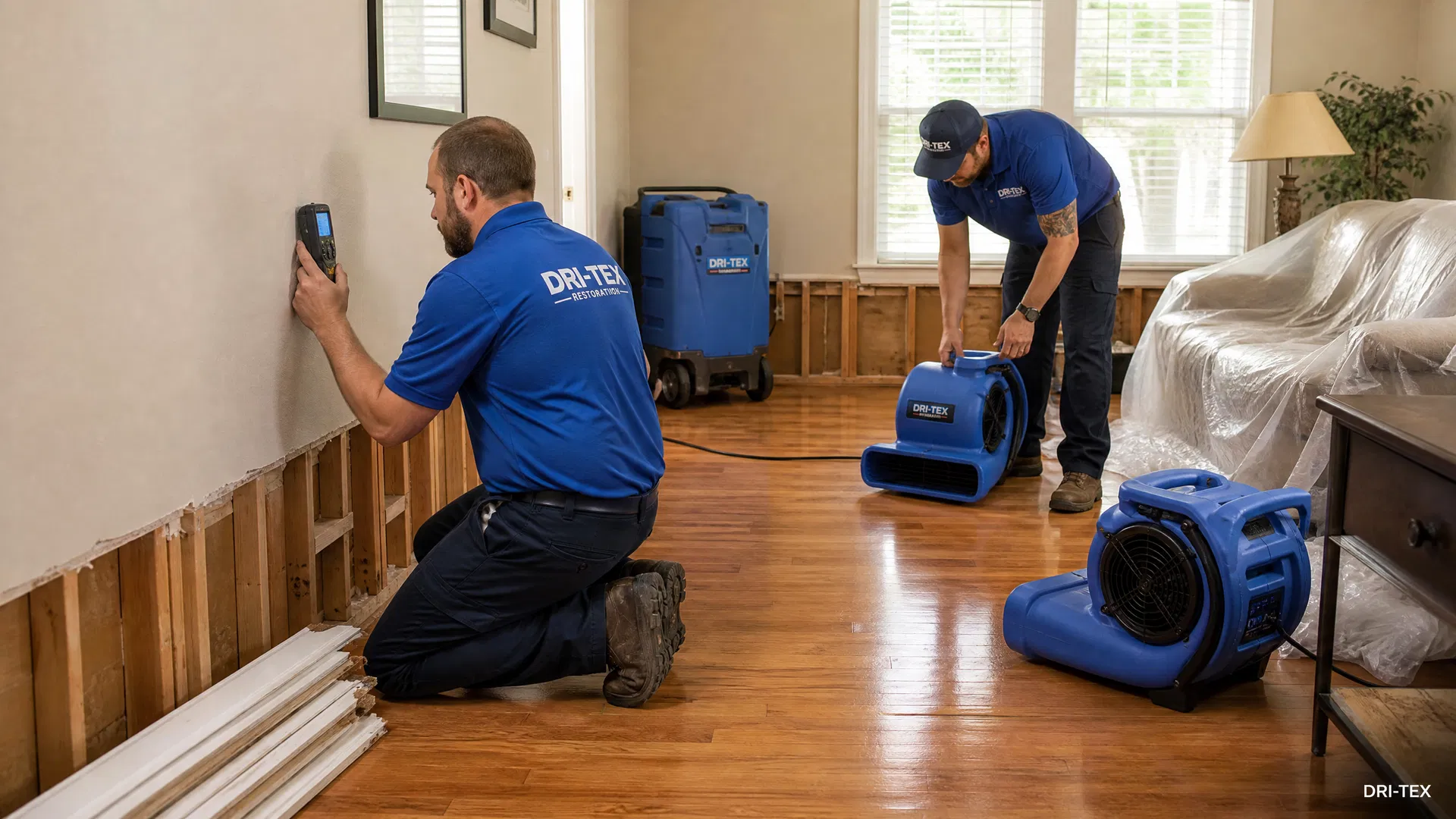
• Extracting standing water with truck-mounted and portable equipment
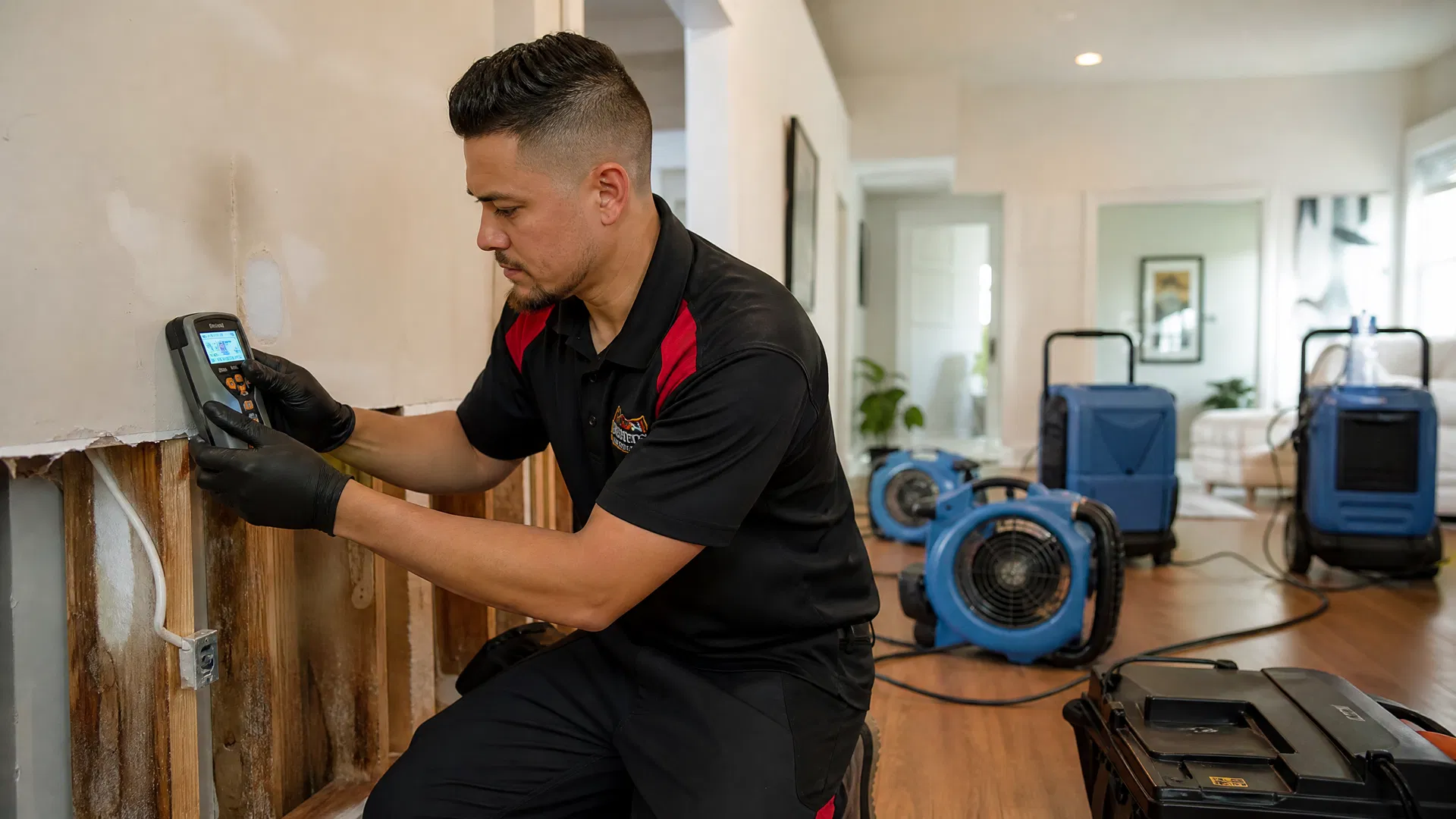
• Mapping moisture inside walls, subfloors, and ceiling cavities with thermal imaging and moisture meters
• Removing materials that cannot be saved (wet drywall, insulation, carpet pad)
• Setting up containment, air movers, and dehumidifiers to dry the structure properly
• Documenting every step in Xactimate for the insurance claim
• Monitoring the drying process daily until moisture readings return to baseline
This is a licensed, certified discipline. IICRC standards govern how the work is done. The equipment, the timeline, and the documentation are all built around one goal: preventing secondary damage and stopping mold before it starts.
Learn more about our Water Damage Restoration services.
What a Contractor Does
A general contractor rebuilds. They install new drywall, lay new flooring, repaint, replace cabinets, and put your home back together cosmetically.
That work is essential — but it happens after the structure is dry and clean. A contractor is not trained or equipped to do psychrometric drying, moisture mapping, or mold-safe demolition. Most do not carry the right insurance for water loss documentation, and most are not set up to bill an insurance carrier through an Xactimate scope.
When a contractor starts repairs on a wet structure, the cosmetic work hides the problem instead of solving it. New drywall goes up over wet framing. New flooring gets installed over a damp subfloor. Six weeks later, the homeowner smells something musty, and the wall has to come back down.
A Real Example From the Field
A homeowner in Conroe called us last spring after a slow leak under a kitchen sink had been running for an unknown period. Before calling us, she had already called the contractor who built her addition years earlier. He was a good builder, and he gave her a fair quote to replace the cabinets, the drywall, and the flooring.
He started demo the next day. He pulled out the cabinets, cut out the drywall, and tore up the flooring. Then he called us — because his moisture readings on the subfloor were off the charts and he was not sure what to do next.
By the time we arrived, the open framing had been exposed to the air for 36 hours. Mold growth was already visible on the back of adjacent cabinets that had not been removed. What should have been a straightforward water mitigation job had become a mold remediation job on top of a water job. The homeowner’s claim got more complicated, the timeline doubled, and the final invoice was significantly higher than it needed to be.
None of that was the contractor’s fault. He simply was not the right first call.
If a water remediation company had been on-site within 24 hours of discovery, the cabinets likely could have been saved, the framing would have dried in place, and the mold issue would never have developed.
See how we handle Mold Remediation when these situations escalate.
Why the Order Matters for Your Insurance Claim
Insurance carriers structure water damage claims in two phases: mitigation and reconstruction. These are billed separately, documented separately, and often handled by different adjusters.
A water remediation company produces the mitigation scope. That scope establishes:
• The cause of loss
• The category of water (clean, gray, or black)
• The extent of affected materials
• The drying timeline and equipment used
• Photographic and moisture documentation throughout
That documentation is what your adjuster needs to approve the claim. Without it, carriers often deny portions of the work or push back on the contractor’s reconstruction estimate later.
A contractor jumping in first usually means no proper mitigation scope exists. The homeowner ends up paying out of pocket for work that should have been covered, or fighting their carrier weeks into the project.
When You Should Call a Contractor First
There are situations where a contractor is the correct first call:
• The water event is fully resolved, all materials are dry, and you only need cosmetic repairs
• You are doing a planned renovation unrelated to a water loss
• The damage is old, fully documented, and there is no active moisture present
If you are not sure which category you are in, a moisture inspection from a remediation company will tell you in about 30 minutes. That single call can save you from making the wrong first move.
Schedule an inspection with our team.
What to Look for in a Water Remediation Company
Not every restoration company operates at the same standard. Before you sign anything, confirm:
• IICRC certification for water damage restoration (WRT) and applied structural drying (ASD)
• Texas licensing for mold-related work if there is any chance of mold involvement (TDLR licensing in Texas)
• 24/7 emergency response with crews dispatched the same day
• Direct insurance billing experience and fluency in Xactimate
• Local presence — a remediation company headquartered an hour away will not respond on emergency hours the way a local team will
• Written scope before work begins, not after
Ask for proof of all of the above. A legitimate water remediation company will hand it to you without hesitation.
The Honest Answer to the Original Question
If you have active water damage in your home right now, call a water remediation company first. Not a contractor. Not a plumber for the repair work beyond the leak itself. Not a flooring company.
A remediation company will stop the damage, document the loss, coordinate with your insurance carrier, and tell you honestly whether the reconstruction phase can be handled by your preferred contractor or whether a turnkey restoration team makes more sense for your situation.
That single decision — making the right first call — is the most valuable thing a homeowner can do in the first 24 hours after a water event.
Schedule a Water Damage Inspection in Montgomery County
If you have discovered water damage in your home, do not wait to see if it dries on its own. Mold can begin growing within 24 to 48 hours, and the cost of mitigation rises significantly once secondary damage starts.
Dri-Tex Restoration is a licensed, IICRC-certified water remediation company serving Conroe, Montgomery, Willis, The Woodlands, Spring, and the surrounding Greater Houston area. Our team responds 24/7, documents every step for your insurance claim, and stays involved through reconstruction if you need it.
Call (936) 324-0006 or visit our contact page to schedule a moisture inspection.
Explore our full Reconstruction Services for after-mitigation rebuilds.